English
 Spanish


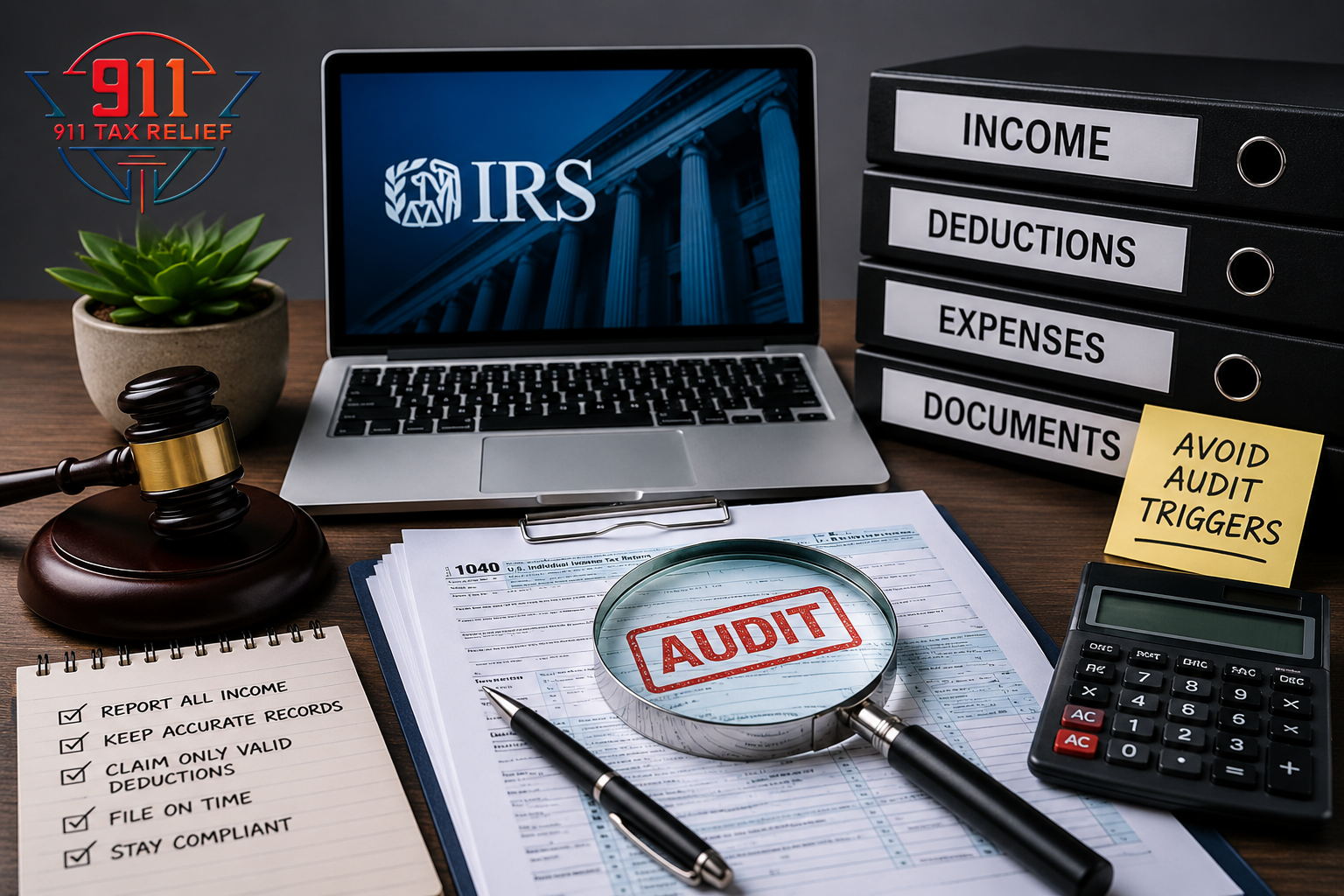
For many taxpayers, receiving an IRS audit notice can be stressful and overwhelming. Whether you are an individual taxpayer, freelancer, or business owner, understanding the most common IRS Audit Taxation triggers can help you avoid unnecessary scrutiny and protect your financial stability.
The IRS uses advanced systems to identify suspicious tax returns, inconsistencies, and reporting errors. While not every mistake results in an audit, certain patterns significantly increase the chances of facing an IRS income tax audit.
By understanding these triggers and using professional accounting & taxation solutions, taxpayers can reduce risk, maintain compliance, and prepare for any potential IRS review.
According to multiple tax experts, common IRS audit triggers include underreported income, excessive deductions, and inconsistent financial reporting.
What Is IRS Audit Taxation?
IRS Audit Taxation refers to the IRS process of reviewing tax returns to verify that reported income, deductions, credits, and expenses are accurate and compliant with federal tax laws.
An audit does not always mean fraud or wrongdoing. In many cases, audits result from:
- Reporting inconsistencies
- Missing documentation
- Calculation errors
- Unusual deduction patterns
- Random selection
However, failing to respond properly can lead to penalties, interest, or additional tax liabilities.
Why the IRS Conducts Tax Return Audits
The IRS audits tax returns to ensure taxpayers are accurately reporting financial information and paying the correct amount of taxes.
The agency compares:
- Reported income
- Employer records
- Bank statements
- Investment data
- Business expenses
Any significant mismatch can increase the likelihood of a tax return audit.
Common IRS Audit Triggers You Must Avoid
1. Underreporting Income
One of the biggest audit triggers is failing to report all taxable income.
The IRS receives copies of:
- W-2 forms
- 1099 forms
- Investment income statements
- Business payment records
If your tax return does not match IRS records, it may trigger an audit.
Underreported income is consistently listed as a major IRS audit trigger.
2. Claiming Excessive Deductions
Large or unusual deductions compared to your income level may raise red flags.
Common deduction issues include:
- Inflated charitable donations
- Excessive business expenses
- Unverified travel deductions
- Overstated home office expenses
The IRS often compares deductions against industry averages and income brackets.
Experts identify excessive deductions as one of the top reasons taxpayers face audits.
3. Large Business Losses Year After Year
Businesses reporting repeated losses may attract IRS attention.
The IRS may question whether the operation is:
- A legitimate business
- A hobby activity
- Intentionally minimizing taxable income
Consistent losses without reasonable explanations often increase audit risk.
Repeated business losses are commonly cited among major IRS audit concerns.
Home Office Deduction Mistakes
The home office deduction is legitimate, but improper claims can create audit risks.
To qualify, the space must generally be:
- Used regularly
- Used exclusively for business
- The principal place of business
Common mistakes include:
- Claiming shared living spaces
- Overestimating office size
- Including personal expenses
Accurate documentation is critical when claiming home office deductions.
High Income Levels and Increased Audit Risk
Higher-income taxpayers often face increased IRS scrutiny due to the complexity of their financial situations.
High earners may have:
- Multiple income sources
- Complex investments
- Business ownership interests
- International transactions
Although higher income does not guarantee an audit, it may increase the chances of review.
Cryptocurrency and Digital Asset Reporting
The IRS has increased enforcement related to cryptocurrency transactions.
Taxpayers must report:
- Crypto trading gains
- NFT sales
- Digital asset income
- Crypto staking rewards
Failing to report digital asset activity properly can trigger audits and penalties.
Mathematical Errors and Filing Mistakes
Simple mistakes can also increase audit risk.
Common filing errors include:
- Incorrect Social Security numbers
- Mismatched income figures
- Calculation errors
- Missing forms
Even small mistakes may delay processing or prompt IRS inquiries.
Carefully reviewing tax returns before submission helps reduce unnecessary complications.
Self-Employment and Cash Income Risks
Self-employed individuals and cash-based businesses often face higher audit rates because income can be harder for the IRS to verify.
Examples include:
- Freelancers
- Contractors
- Restaurant owners
- Small retail businesses
Maintaining accurate records and separating personal and business finances are essential for reducing audit exposure.
Importance of Accurate Recordkeeping
Strong financial documentation is one of the best defenses during an IRS income tax audit.
Taxpayers should maintain:
- Receipts
- Invoices
- Bank records
- Mileage logs
- Payroll documentation
- Expense reports
Proper recordkeeping helps verify deductions and income accuracy if the IRS requests supporting evidence.
How Professional Accounting & Taxation Solutions Help
Professional accounting & taxation solutions can significantly reduce audit risks and improve compliance.
Benefits include:
Accurate Tax Preparation
Professionals help minimize reporting errors and inconsistencies.
Audit Prevention Strategies
Experts identify potential red flags before filing returns.
IRS Compliance Support
Tax professionals ensure compliance with changing tax laws.
Audit Representation
If an audit occurs, professional representation can protect taxpayer rights and improve communication with the IRS.
For expert assistance with IRS audits and professional representation, visit our IRS Audit Representation Services page.
What To Do If You Receive an IRS Audit Notice
Receiving an audit notice does not mean panic is necessary.
Important steps include:
- Read the notice carefully
- Gather supporting documentation
- Respond promptly
- Avoid providing unnecessary information
- Seek professional tax guidance
Ignoring IRS notices can worsen the situation and increase penalties.
Tips to Reduce IRS Audit Risk
Here are several proactive strategies to minimize audit exposure:
File Accurate Returns
Double-check all calculations and income reporting.
Keep Organized Records
Store documentation for deductions and expenses.
Report All Income
Ensure all W-2s, 1099s, and other income sources are included.
Avoid Guessing Numbers
Always use documented financial records.
Work With Tax Professionals
Professional tax guidance helps reduce errors and maintain compliance.
Conclusion
Understanding common IRS Audit Taxation triggers is one of the best ways to protect yourself from unnecessary IRS scrutiny. While audits can happen for many reasons, taxpayers who maintain accurate records, report income properly, and avoid exaggerated deductions significantly reduce their risk of facing a costly tax return audit.
Whether you are concerned about an upcoming IRS income tax audit or want proactive accounting & taxation solutions, professional support can make the process far less stressful. At 911 Tax Relief, we help individuals and businesses navigate complex IRS matters with confidence and personalized guidance.
For more information or related support regarding IRS audits and tax resolution services, visit https://911taxrelief.com/ and connect with our experienced team today.