English
 Spanish


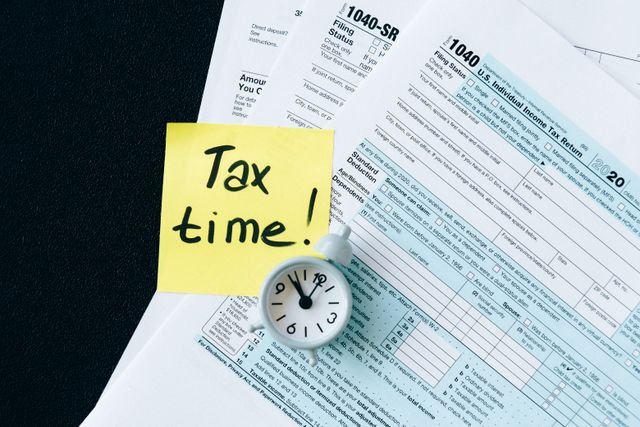
When IRS Letter 1058 or an LT11 notice lands in your mailbox, your tax account has reached the sharp end of the collection process.
The IRS says you owe tax. It also says it plans to collect that money through a levy if you stay silent.
A levy can reach your paycheck, your bank balance, your Social Security payments, your vehicle, your home, or other property you own. Before it moves that far, the IRS usually sends a final notice. That notice hands you one clear right: you can ask for a Collection Due Process hearing, known as a CDP hearing.
Here is the part that matters most, so read it first.
You usually get 30 days from the date printed on your LT11 or Letter 1058 to request a CDP hearing.
You make that request on Form 12153, Request for a Collection Due Process or Equivalent Hearing, and you mail it to the address shown on your own notice.
So please do not slide this letter into a drawer. What you do in the next few weeks shapes the rights you keep.
What Is IRS Letter 1058?
Letter 1058 carries a long official name: Final Notice of Intent to Levy and Notice of Your Right to a Hearing.
Through this letter, the IRS tells you two things at once. First, you have an unpaid balance. Second, the agency intends to take your property or income unless something changes. The same letter then explains your right to ask Appeals for a hearing.
The IRS sends Letter 1058 after your account has travelled through earlier collection stages without a proper solution.
One point often gets missed. The letter does not mean the IRS has already taken anything. It gives you a last window to respond before enforcement begins, subject to the rules that fit your case.
The IRS also issues Letter 11, which most people call LT11. It covers the same final notice stage and carries the same hearing right. The IRS lists both Letter 11 and Letter 1058 among the notices that open the door to a CDP appeal.
What Is an LT11 Notice?
An LT11 is the IRS Final Notice of Intent to Levy and Notice of Your Right to a Hearing.
It tells you plainly that the IRS plans to collect the unpaid tax by levy.
A levy can reach many different assets. Depending on your situation, it may touch:
- Wages and salary
- Bank accounts
- Business assets
- Vehicles
- Real property
- Certain federal payments
- Social Security benefits
- Other property or rights to property
The IRS draws a clear line between a lien and a levy. A levy takes money or property. A lien only records the government's legal claim over what you own.
Keep that difference in mind.
A tax lien protects the government's claim.
A tax levy actually takes the money.
LT11 vs Letter 1058 at a Glance
| Notice | What it means | What you should do |
|---|---|---|
| LT11 | Final notice of intent to levy, plus hearing rights | Think about filing a CDP request |
| Letter 1058 | Final notice of intent to levy, plus hearing rights | Think about filing a CDP request |
| CP504 | An earlier collection notice with different consequences | Do not mistake it for the final CDP notice |
| Levy notice | Collection action has started or is underway | Act the same day |
The IRS names Letter 11 and Letter 1058 as notices that allow a taxpayer to request a CDP hearing.
The 30-Day CDP Deadline
Every other detail on the notice sits behind this one.
The IRS normally expects your CDP hearing request within 30 days of the date on the final notice. Your notice states the deadline and tells you exactly where to send the request.
Please do not assume a phone call buys you extra time. The IRS states clearly that talking to Collection does not pause or stretch the 30-day CDP window.
A Simple Example
Say your Letter 1058 shows a date of 4 September.
You cannot start counting from the day you opened the envelope.
The notice date drives the deadline, and the IRS follows set rules for counting those days. The Internal Revenue Manual explains that the notice date itself does not count as day one.
Because small facts can shift the calculation, check the printed date on your own notice and follow the instructions on that page.
What Is a Collection Due Process Hearing?
A Collection Due Process hearing gives you a chance to put your case before the IRS Independent Office of Appeals.
You can question the proposed collection action. Where the rules allow, you can also put forward a workable way to settle the debt.
The IRS confirms that taxpayers who receive a qualifying CDP notice generally get 30 days to ask for the hearing.
During the process you may be able to:
- Question whether the collection action suits your situation
- Raise certain defences
- Discuss alternatives to a levy
- Propose an Installment Agreement
- Put forward an Offer in Compromise
- Ask about Currently Not Collectible status
- Raise other qualifying collection issues
The Taxpayer Advocate Service adds an important point. A timely CDP request protects your ability to take the Appeals decision to the U.S. Tax Court for review.
How to Request a CDP Hearing With Form 12153
Most taxpayers use Form 12153 to ask for a Collection Due Process or Equivalent Hearing.
Work through these steps.
Step 1: Read the whole notice
Pull out these details:
- The notice date
- The tax periods listed
- The balance the IRS claims
- The deadline
- The mailing address
- The instructions for requesting a hearing
Step 2: Check the tax debt itself
Compare the notice against your own IRS records and see whether the balance looks right.
Watch for:
- Payments the IRS has not credited
- Assessments that look wrong
- Returns you never filed
- Penalties
- Interest
- Payment plans you agreed to earlier
- Older IRS letters on the same periods
Step 3: Name your real concern
Ask yourself why the proposed levy creates a problem for you.
At this stage you should also think about a practical alternative you can actually afford.
Step 4: Fill in Form 12153
Give the information the form asks for.
Explain why you disagree, or describe the collection alternative you want Appeals to consider.
Step 5: Sign the request
The IRS wants the request in writing, signed by you or by your authorised representative.
Step 6: Post it to the right address
Use the address printed on your CDP notice, not a general IRS address you found elsewhere.
Keep a full copy of everything you send.
Step 7: Save proof that you sent it on time
Timing decides a CDP case.
The IRS explains that a properly addressed envelope with correct postage and a timely postmark can satisfy the filing requirement.
What Happens After You File the Request?
A timely request pushes your case into the Appeals process.
The IRS normally holds back collection while a CDP hearing stays open, although specific rules and exceptions can still affect what happens.
Appeals then gives you room to discuss the collection action and the options in front of you.
Prepare before the hearing rather than during it. Collect the papers that back your position, such as:
- Recent pay statements
- Bank statements
- Mortgage or rent details
- Utility bills
- Insurance costs
- Medical costs
- Vehicle costs
- Loan statements
- Filed tax returns
- Proof of payments you made
- IRS notices you received
- Details of your assets
- Details of your monthly income
The exact list depends on the issues in your case.
Can a CDP Hearing Stop an IRS Levy?
A timely CDP request offers real protection while the case runs.
The IRS generally suspends levy activity during a pending CDP hearing, subject to exceptions and specific rules.
Even so, Form 12153 does not wipe out the debt on its own.
The hearing deals with the collection action and gives you space to present a solution. You still need a realistic plan for the balance underneath.
That plan may involve:
- Paying the balance in full
- An Installment Agreement
- An Offer in Compromise
- Currently Not Collectible status
- Another qualifying collection alternative
What If You Miss the 30-Day Deadline?
Missing the deadline changes your appeal rights in a serious way.
In many cases you can still ask for an Equivalent Hearing. The IRS allows that request within the applicable one-year period after the CDP levy notice.
An Equivalent Hearing does not carry the same weight as a timely CDP hearing.
The biggest gap involves the courts. If the Equivalent Hearing goes against you, you generally cannot petition the U.S. Tax Court to review that Appeals decision.
That single difference explains why the 30-day deadline deserves your full attention.
CDP Hearing vs Equivalent Hearing
| Feature | CDP Hearing | Equivalent Hearing |
|---|---|---|
| Request timing | Generally within 30 days | Used after the CDP deadline passes |
| Form 12153 | Generally used | Generally used |
| Appeals review | Yes | Yes |
| Collection issues | Covers qualifying issues | Similar administrative review |
| Tax Court review | Generally available after a CDP determination | Generally not available |
| Deadline | Strict | Generally up to one year for levy notices |
The exact rules depend on your notice type and your circumstances. Both the IRS and the Taxpayer Advocate Service stress the different deadlines and court review rights.
What Happens on Day 31?
Many people picture revenue officers arriving on day 31 to take everything.
Real life moves differently.
The 30-day window sets a legal deadline for the hearing request. Once it passes, the IRS can go ahead with levy action if nothing else stands in the way. IRS procedures also recognise events that can change the picture, such as a payment, a pending or approved installment agreement, or a hearing request filed correctly.
Still, treat day 31 as a risk, not a resting point.
If you want a hearing, send the request before the clock runs out.
What If the IRS Levies Your Bank Account?
A bank levy behaves differently from a wage levy.
When the IRS serves a levy on your bank, the bank freezes the covered funds.
Federal law then provides a 21-day waiting period before the bank hands that money to the IRS.
Those three weeks give you a chance to contact the IRS and sort out the problem.
If a levy has already hit your account, move today. That 21-day window often decides whether you get the funds released or lose them.
Learn more through 911 Tax Relief's IRS tax levy release service.
What If the IRS Garnishes Your Wages?
An IRS wage levy takes a portion of every paycheck and keeps taking it, pay period after pay period, until the IRS releases the levy.
The IRS describes wage levies as continuous. A bank levy, by contrast, involves that single 21-day holding period.
When a wage levy starts, you usually face two problems at once: the money leaving your salary now, and the tax debt behind it.
Possible ways forward include:
- Paying the tax debt
- Setting up a suitable payment arrangement
- Showing economic hardship
- Requesting a qualifying collection alternative
- Using your CDP rights while they last
You can also read about 911 Tax Relief's wage garnishment release service.
Can Economic Hardship Get a Levy Released?
Yes. Hardship can support a levy release.
The IRS treats a levy as an economic hardship when it stops you from meeting basic, reasonable living expenses. The agency will usually ask for financial details before it decides.
Take a common situation. A wage levy leaves you short on rent, food, electricity, and medicine. In that case you need to show the IRS a clear, documented picture of your income and expenses.
Remember one thing. A levy release stops the taking. It does not clear the debt. You still need a proper resolution for the balance.
Installment Agreement After an LT11 or Letter 1058
An Installment Agreement lets you pay your tax debt over time instead of clearing it in one go.
The IRS can release a levy once you enter an agreement whose terms do not allow the levy to continue.
Not every taxpayer qualifies for every plan. The IRS looks at your circumstances and at the terms of the specific agreement.
If you have returns still unfiled, deal with those as part of the same plan. They affect what the IRS will accept.
You can review 911 Tax Relief's IRS tax resolution services for the options available.
Offer in Compromise
An Offer in Compromise, or OIC, lets a qualifying taxpayer settle the debt for less than the full amount.
The IRS studies your finances before it accepts an offer. Your income, expenses, assets, and overall position all shape the outcome.
An OIC does not suit everyone. Check your eligibility honestly before you treat it as the answer.
Currently Not Collectible Status
Some people simply cannot pay. Their income barely covers basic living costs, and nothing remains for the IRS.
In that situation, Currently Not Collectible status, or CNC, may bring temporary relief from collection. The IRS can also release a levy once it accepts that the levy creates an immediate economic hardship.
CNC status does not cancel the debt. Interest and penalties keep running, and the IRS can review your finances again later.
911 Tax Relief also explains Currently Not Collectible status in more detail.
Which Documents Should You Gather?
Start building your file the day the notice arrives.
Income records
- Recent pay stubs
- Business income records
- Pension statements
- Social Security details
- Any other regular income
Housing records
- Mortgage statement
- Rent agreement or receipts
- Property tax details
- Home insurance
Living expenses
- Utility bills
- Food costs
- Transport costs
- Health insurance
- Medical bills
- Other necessary personal expenses
Debt details
- Credit card statements
- Personal loans
- Auto loans
- Other major obligations
Tax records
- IRS notices
- Filed tax returns
- Payment records
- Earlier agreements
- Proof of withholding
- Related correspondence
Your final list depends on the resolution you plan to seek.
Common Mistakes After an LT11 or Letter 1058
1. Ignoring the notice. Silence lets the collection process roll on. Open the letter and mark the deadline the same day.
2. Waiting until the last day. You need time to collect records, complete the form, and fix errors before posting it.
3. Treating CP504 and LT11 as the same thing. They are not. Different notices carry different consequences and different appeal rights.
4. Calling the IRS but never filing the request. A phone call does not replace a written CDP request. The IRS states that talks with Collection do not pause or extend the 30-day deadline.
5. Picking a resolution without checking your numbers. An Installment Agreement, an OIC, and CNC status each suit a different financial reality. Choose based on what you can genuinely pay.
6. Forgetting unfiled returns. Missing returns block many long-term solutions. Check your filing history first.
7. Believing a levy release wipes out the debt. It stops the levy under qualifying conditions. The balance stays.
Your Action Checklist
Today
- Read the notice from top to bottom.
- Note the notice date.
- Work out the CDP deadline.
- Confirm which tax periods appear on the notice.
- Check the balance against your records.
- Collect your earlier IRS letters.
- Review your filing history.
- Judge how soon a wage or bank levy could hit you.
Before the 30-day deadline
- Decide whether you want a CDP hearing.
- Complete Form 12153 if it suits your case.
- Explain your concerns in clear language.
- Choose a realistic resolution to propose.
- Post the request to the address on the notice.
- Keep copies and proof of posting.
If the deadline has already passed
- Do not assume the door has closed.
- Check whether an Equivalent Hearing remains open to you.
- Look at other appeal or collection options that may fit.
- Act well before the one-year Equivalent Hearing period ends.
Both the IRS and the Taxpayer Advocate Service stress how strictly these deadlines apply.
When Should You Bring in a Professional?
Consider getting help when:
- You have received an LT11 or Letter 1058.
- A wage levy has started.
- Your bank account has been levied.
- You cannot pay the full balance.
- Several years of tax remain unpaid.
- You have returns still to file.
- You believe the IRS has calculated the balance wrongly.
- You want to apply for an Offer in Compromise.
- The levy leaves you unable to meet basic expenses.
- You need help preparing Form 12153.
- You missed the CDP deadline and want to weigh an Equivalent Hearing.
A tax professional reviews the notice, your financial records, your filing history, and your collection status before suggesting a strategy.
911 Tax Relief represents taxpayers in IRS collection matters, including wage garnishments, bank levies, installment agreements, Offers in Compromise, and Currently Not Collectible cases.
You can also browse 911 Tax Relief's IRS debt help resources.
Frequently Asked Questions
Q1. How long after an LT11 before the IRS levies?
The LT11 gives you 30 days to request a CDP hearing. After that period, the IRS may go ahead with levy action if nothing else prevents it.
Q2. Can I file a CDP request after 30 days?
You generally lose the timely CDP rights once the deadline passes. You may still request an Equivalent Hearing within one year of the CDP levy notice, but that route usually does not carry Tax Court review of the Appeals decision.
Q3. Does a CDP hearing stop an IRS levy?
The IRS generally suspends collection while a CDP hearing stays open, though exceptions and special situations can apply.
Q4. What does Form 12153 do?
It requests a Collection Due Process or Equivalent Hearing. You sign it and send it to the address shown on your IRS notice.
Q5. What happens if I ignore Letter 1058?
The IRS can continue collection and eventually levy qualifying income or property. You also lose the 30-day CDP window.
Q6. Can the IRS take my bank account after Letter 1058?
Yes, once it meets the legal requirements. If a bank levy happens, federal law gives the bank a 21-day waiting period before it sends the money to the IRS.
Q7. Can the IRS garnish my paycheck after Letter 1058?
Yes. A wage levy takes part of your pay and continues until the IRS releases it.
Q8. Can hardship stop an IRS levy?
A levy may qualify for release when it creates an immediate economic hardship that stops you from meeting basic, reasonable living expenses.
Q9. Does a levy release erase my IRS debt?
No. The balance stays until you resolve it through a suitable arrangement or another available solution.
Q10. Can I still settle my debt after Letter 1058?
Often yes. Depending on your finances, an Installment Agreement, an Offer in Compromise, Currently Not Collectible status, or another qualifying option may fit.
Never Ignore an LT11 or Letter 1058
An LT11 or Letter 1058 marks a serious stage in IRS collection. It does not mean you have run out of choices.
Put the 30-day CDP deadline at the top of your list. If you want to protect those rights, send Form 12153 on time and follow the instructions printed on your notice.
While that runs, look honestly at your balance, your filing history, your income, your expenses, your assets, and what you can realistically pay. The right solution follows from those numbers.
If a bank levy or wage levy has already started, move faster. A bank levy usually gives you a 21-day window. A wage levy keeps taking from every paycheck until the IRS releases it.
For help reviewing a final notice and choosing a collection strategy, 911 Tax Relief offers IRS tax resolution services and representation.