English
 Spanish


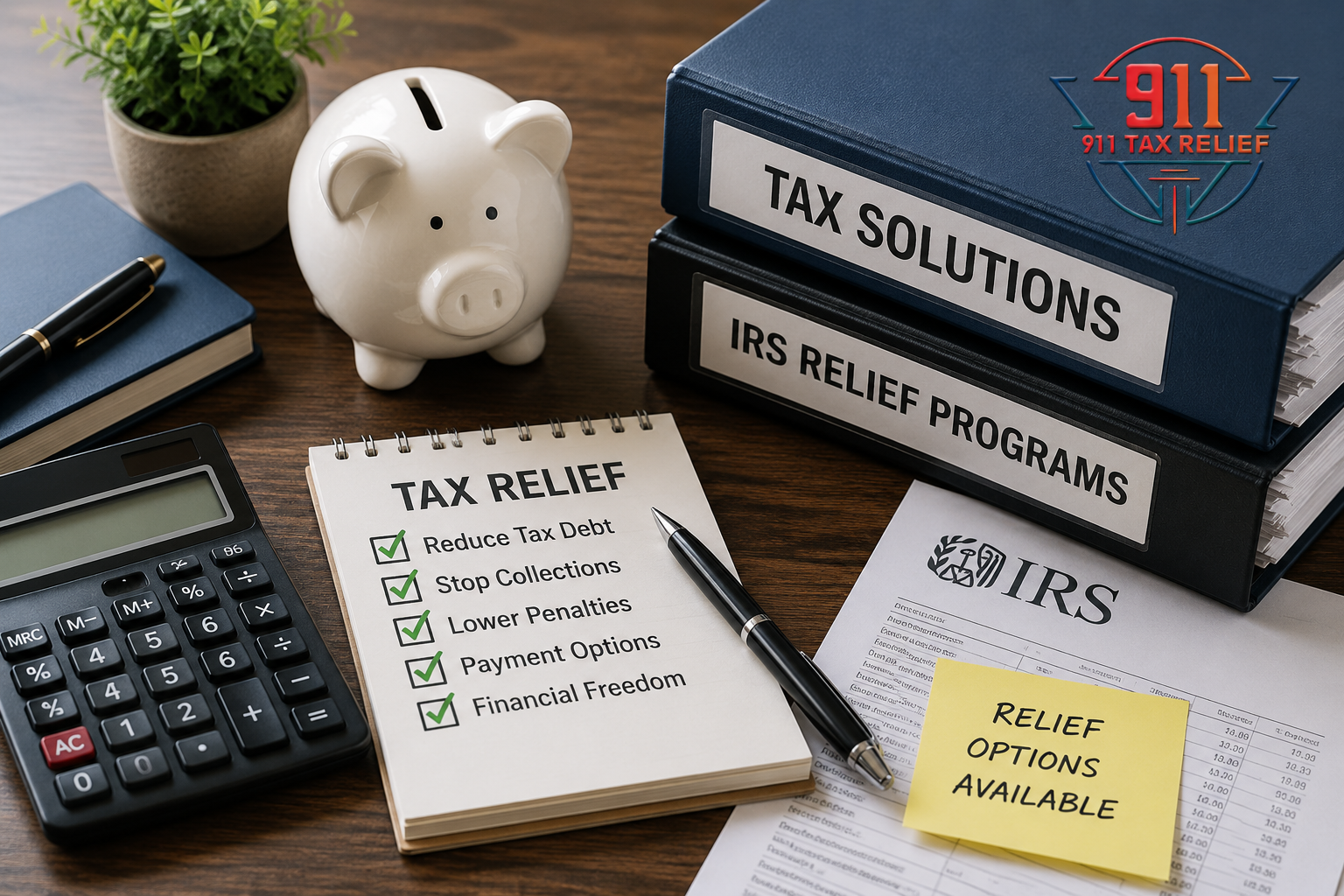
Dealing with tax debt can be stressful, especially when penalties, interest, and collection notices continue to grow. Fortunately, the IRS offers several relief solutions designed to help taxpayers regain financial stability. Understanding the best ways to qualify for IRS Tax Relief Programs can make a major difference in reducing financial pressure and resolving tax debt legally.
Whether you are facing wage garnishments, bank levies, audits, or unpaid taxes, professional guidance from 911 Tax Relief can help you explore the most effective resolution strategies for your situation.
The IRS provides several tax debt assistance options to help eligible taxpayers resolve outstanding balances and collection issues.
What Are IRS Tax Relief Programs?
IRS Tax Relief Programs are solutions designed to help taxpayers manage or reduce their tax debt when they cannot pay the full amount owed immediately.
These programs may include:
- Installment Agreements
- Offer in Compromise
- Penalty Abatement
- Currently Not Collectible Status
- Innocent Spouse Relief
- Audit Representation
The purpose of these programs is to help taxpayers become compliant while reducing financial hardship.
Why Taxpayers Seek IRS Tax Relief
Many taxpayers experience financial challenges that make paying taxes difficult.
Common causes include:
- Job loss
- Medical emergencies
- Business setbacks
- Divorce or separation
- Economic hardship
- Unfiled tax returns
When taxes remain unpaid, the IRS may begin aggressive collection actions, including:
- Wage garnishments
- Bank levies
- Tax liens
- Asset seizures
Seeking professional IRS Tax Relief early can help prevent these issues from escalating.
Understanding IRS Collection Actions
The IRS has broad authority to collect unpaid taxes. Taxpayers who ignore notices may face increasingly serious consequences.
According to the IRS, taxpayers with outstanding debt can explore available payment and relief options to resolve their obligations.
Understanding your rights and available options is the first step toward protecting your financial future.
Best Ways to Qualify for IRS Tax Relief Programs
1. Demonstrate Financial Hardship
One of the most important factors in qualifying for many relief programs is proving financial hardship.
The IRS reviews:
- Monthly income
- Necessary living expenses
- Assets and liabilities
- Employment status
Taxpayers experiencing significant financial hardship may qualify for reduced payment arrangements or temporary collection suspension.
Financial hardship is commonly considered when evaluating eligibility for various IRS tax relief options.
2. File All Required Tax Returns
Before approving many relief programs, the IRS generally requires taxpayers to file all missing tax returns.
Unfiled returns can:
- Increase penalties
- Trigger substitute returns
- Delay tax resolution efforts
Becoming compliant with filing requirements significantly improves eligibility for relief programs.
3. Provide Accurate Financial Documentation
The IRS requires detailed financial records during most tax resolution cases.
Important documents may include:
- Pay stubs
- Bank statements
- Tax returns
- Business records
- Expense reports
Providing accurate and complete information helps tax professionals negotiate effectively with the IRS.
Offer in Compromise: Settling Tax Debt for Less
An Offer in Compromise allows eligible taxpayers to settle their tax debt for less than the full balance owed.
The IRS evaluates:
- Ability to pay
- Income potential
- Asset equity
- Financial hardship
Although approval is not guaranteed, taxpayers who genuinely cannot afford their full tax liability may qualify.
Professional 911 Tax Relief services can help determine whether an Offer in Compromise is appropriate for your situation.
Installment Agreements for Monthly Payments
Many taxpayers qualify for monthly payment plans through IRS installment agreements.
Benefits include:
- Avoiding aggressive collections
- Making manageable monthly payments
- Staying compliant with IRS requirements
Installment agreements are often one of the most accessible forms of IRS Tax Relief Programs.
Tax debt relief options frequently include structured payment plans depending on financial eligibility and documentation.
Penalty Abatement Programs
IRS penalties can quickly increase tax balances. Fortunately, some taxpayers may qualify for penalty relief.
Common reasons for penalty abatement include:
- First-time penalty relief
- Serious illness
- Natural disasters
- Incorrect professional advice
- Unavoidable financial hardship
Reducing penalties can significantly lower overall tax debt and improve affordability.
Currently Not Collectible Status
Taxpayers experiencing severe financial hardship may qualify for Currently Not Collectible (CNC) status.
When approved:
- IRS collection efforts pause temporarily
- Wage garnishments may stop
- Bank levies may be suspended
Although penalties and interest may continue accruing, CNC status provides temporary financial breathing room.
Innocent Spouse Relief
Some taxpayers may qualify for Innocent Spouse Relief if their spouse or former spouse improperly reported taxes without their knowledge.
This program may help individuals avoid liability for:
- Underreported income
- Incorrect deductions
- Tax fraud committed by a spouse
Eligibility depends on several legal and financial factors.
The Importance of Professional Tax Representation
Resolving IRS Tax Problems alone can be difficult and stressful. IRS procedures are complex, and mistakes can lead to denied applications or increased liabilities.
Professional representation offers several advantages:
Direct IRS Communication
Tax professionals can communicate directly with the IRS on your behalf.
Improved Negotiation Strategies
Experienced professionals understand IRS procedures and negotiation methods.
Faster Resolution
Proper documentation and accurate filings help speed up the process.
Reduced Stress
Having expert support provides peace of mind during challenging tax situations.
For more information about our experienced team and approach, visit our About 911 Tax Relief page.
Common Mistakes That Hurt IRS Tax Relief Eligibility
Many taxpayers unknowingly reduce their chances of approval by making avoidable mistakes.
Common errors include:
- Ignoring IRS notices
- Failing to file returns
- Providing inaccurate financial data
- Missing payment deadlines
- Attempting negotiations without professional guidance
Addressing tax issues proactively greatly improves the likelihood of successful resolution.
Tips for Staying Compliant After Receiving Tax Relief
Once tax debt is resolved, maintaining compliance is critical.
File Taxes On Time
Always submit returns before deadlines.
Pay Estimated Taxes
Self-employed taxpayers should make quarterly payments.
Maintain Financial Records
Organized records help avoid future IRS disputes.
Work With Tax Professionals
Professional guidance helps ensure long-term compliance and tax planning success.
Conclusion
Managing tax debt and dealing with the IRS can feel overwhelming, but taxpayers have options. Understanding the best ways to qualify for IRS Tax Relief Programs is an important step toward reducing financial stress, avoiding aggressive collection actions, and regaining control of your finances.
Whether you are struggling with unpaid taxes, wage garnishments, audits, or other IRS Tax Problems, professional support can help you navigate the process more effectively. At 911 Tax Relief, we are dedicated to helping individuals and businesses find customized tax solutions that fit their unique financial situations.
For more information or personalized support regarding your tax situation, visit https://911taxrelief.com/ and connect with our experienced team today. Taking action early can make all the difference in achieving long-term financial stability.